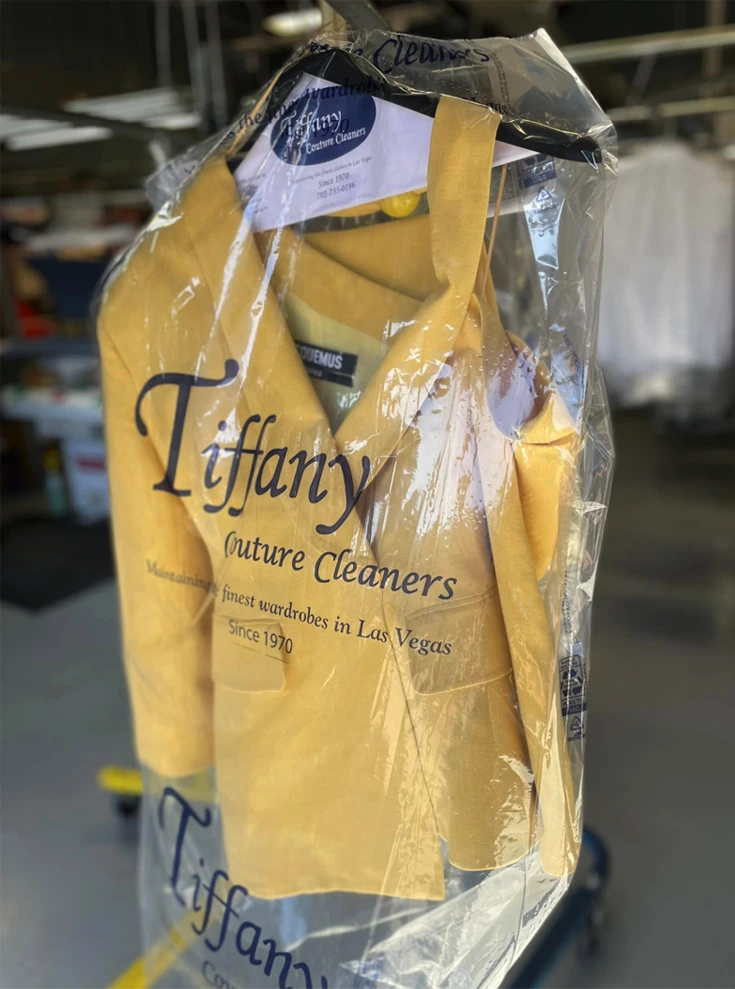
A couture gown and a cotton shirt should never go through the same cleaning process, yet at most cleaners, they do. The difference between a garment that comes back looking cared for and one that comes back merely clean usually comes down to a handful of decisions made before, during, and after the actual cleaning, decisions a standard cleaning operation isn't built to make on a per garment basis.
Here's what a genuinely qualified couture cleaner actually does differently, and how to tell the difference before you hand over a piece that can't be replaced.
Couture and delicate garments aren't built like everyday clothing. Unusual fibers, hand-applied embellishment, and structural elements, such as boning, interfacing, and internal linings, all respond differently to heat, moisture, and agitation than a cotton shirt or a pair of trousers. A standard cleaning process is built for volume and consistency, not for reading what a specific garment needs.
The stakes are real. The wrong solvent on the wrong fiber can shrink a jacket permanently. The wrong dry cycle can pull dye out of a silk blouse, and a structured piece can lose its shape in a single pass through equipment that wasn't designed with it in mind. Once that happens, there's no undoing it, and pieces like these usually can't be replaced off a rack.
Not every nice garment falls into this category, and not every delicate garment looks obviously fragile. Pieces that need specialized handling typically include:
If a garment combines more than one of these elements, it needs more than a standard cleaning cycle to come out looking the way it went in.
Before any cleaning method is chosen, a qualified couture cleaner identifies what they're actually working with. That means checking fiber content, weave, dye stability, and the garment's structural elements, rather than defaulting to whatever process handles most of what comes through the door that day.
This step is invisible to the customer. You won't see it happen, and you won't get a receipt for it. But it's where most of the risk in cleaning a delicate garment gets caught, or missed entirely.
A cleaner who skips this step doesn't cut a corner you'll notice right away. They cut the step that determines whether or not your garment survives the process intact.
A thorough pre-cleaning inspection typically covers:
Different fabrics call for specific processes. Traditional dry cleaning solvents work well for some fibers and poorly for others. Wet cleaning suits certain garments better than dry cleaning ever could. Some pieces need to be hand cleaned entirely, with no machine involvement at all.
A specialist chooses based on what the individual garment requires. A standard cleaner, working at volume, often runs one process for nearly everything that comes in, because that's what keeps their operation efficient. Efficiency and precision aren't the same goal, and for couture pieces, precision is what matters.
Think of it less as a single cleaning method and more like a set of tools, where the skill is in choosing the right tool for the piece in front of you. A silk gown, a wool blazer, and a beaded cocktail dress can all arrive in the same week and leave through three completely different processes. That's not an inconsistency. That's the process working the way it's supposed to.
This is where the difference between a standard cleaner and a specialist becomes something you can actually picture. Embellished garments need attention before cleaning even starts, not just careful handling once the process is underway.
A qualified cleaner hand inspects embellished areas first, checking for loose beads, sequins, or trim, and reinforces anything that came unsecured before the garment goes anywhere near a cleaning process.
From there, embellished sections are often masked off or hand cleaned separately from the base fabric, so the treatment suited to the beading doesn't damage the fabric around it, and vice versa. Machine agitation, which can catch, pull, or shed delicate trim in seconds, is avoided entirely in these areas.
This reinforcement step is worth understanding on its own, because it's easy to overlook. A single loose thread holding a row of beads in place can unravel further under any agitation, even gentle handling.
Before cleaning, securing that thread makes a big difference to your beaded hem. It's the difference between arriving home intact or missing a section you didn't realize was loose in the first place.
Cleaning is only half the job. How a garment is finished afterward determines if it looks cared for or just processed. A flat commercial press works fine for a dress shirt. It does not work for a structured jacket, a pleated skirt, or a gown with a fitted bodice.
A qualified couture cleaner form presses garments over pads or forms shaped to match the piece's own structure, rather than flattening everything against a single surface. Details a machine press would distort, such as pleats, structured shoulders, and delicate collars, are hand-finished instead, with attention to how the garment was originally constructed to move. These are the delicate garment cleaning tips that separate a piece that looks merely cleaned from one that looks genuinely cared for.
The equipment matters here as much as the technique. Specialized presses, shaped forms, and hand irons suited to fine fabrics all exist because flat, high heat, high pressure equipment simply wasn't designed for garments with dimension.
A jacket pressed over a properly shaped form comes back with its shoulders sitting the way they were cut to sit. The same jacket run through a flat press comes back technically clean, and visibly flattened.
That's the real difference between a garment that's been cleaned and one that's been cared for: it looks pressed by someone who understood how it was built, not just run through a machine that got it clean.
You don't need to understand solvents or pressing equipment to evaluate a cleaner. You just need to ask the right questions and pay attention to the specific answers. Learning how to care for couture clothing starts with knowing which of these questions your current cleaner can actually answer.
A cleaner who answers these specifically, by name, for your exact garment, tells you something. A cleaner who gives you a version of how they handle all fabrics tells you something, too.
You've read what separates real expertise from a standard cleaning cycle. If you now wonder whether or not your own cleaner actually meets that bar, that instinct is worth listening to.
At Tiffany Couture Cleaners, we've provided luxury dry cleaning service to Las Vegas's most refined wardrobes since 1970. Every garment is inspected, sorted, and cleaned using our SYSTEMK4 green cleaning process, chosen specifically because it protects fabric integrity, structure, and finish on luxury and couture pieces. We don't run one process for everything that comes through the door. We identify what your garment needs, then clean accordingly.
Bring in your piece and let us show you the difference, by name, not by generic quote.
Address:4205 S. Grand Canyon Dr., Suite #1, Las Vegas, NV, 89147
Phone: +1 702-842-0103
Email: info@tiffanycc.com